

One estimate suggests nearly 40% of U.S. adults may not get enough vitamin D. That matters because this nutrient helps the body absorb calcium and maintain strong bones. It also supports immune function, hormone balance, and cell growth.
Vitamin D foods for women can be simple additions to a balanced diet. Good sources include fatty fish, UV-exposed mushrooms, egg yolks, and fortified cereal or milk. Check labels to compare levels, since amounts vary by product. Pairing these choices with healthy fat can also help your body absorb this nutrient.

Try eggs or fortified cereal at breakfast, then serve fish at lunch or dinner. Mushrooms can add variety to meals throughout the week. Sunlight is another natural source: 5–30 minutes of daily exposure may help, though skin tone, season, and location affect how much your body makes. A varied eating plan offers a practical way to support bone health.
Key Takeaways
- Choose a mix of fish, mushrooms, eggs, and fortified options.
- Check product labels to compare nutrient amounts.
- Pair meals with healthy fats and a varied diet.
- Include these choices at breakfast, lunch, or dinner.
- Sun exposure varies by season, location, and skin tone.
1. Why Vitamin D Matters for Women’s Bone Health
This nutrient helps the body absorb calcium. Without enough, the body may take in only about 10% to 15% of the calcium you consume. Calcium supports bones and teeth, while steady intake also helps muscles work well.

How Calcium Uptake Supports Bones
It also plays a role in immune function. Pairing calcium-rich meals with a reliable source of this nutrient can support bone health over time.
Low Levels, Deficiency, and Risk Factors
Ongoing deficiency may weaken bones or lower bone density. Some people also notice muscle aches, weakness, or cramps. Age, limited sun exposure, and certain health conditions can raise risk. A clinician can assess concerns, review vitamin levels, and advise on a recommended daily amount. They can also discuss whether dietary supplements make sense.
Estimates vary by location: one report places low intake among nearly 40% of U.S. adults, while a UK estimate is about one in six adults. These figures use different populations and should not be treated as a direct comparison.
| Location | Reported share | Context |
|---|---|---|
| United States | Nearly 40% | Adults may not get enough |
| United Kingdom | About 1 in 6 | Adults have low levels |
2. Best vitamin D foods for women
Several everyday choices can add this nutrient to a balanced eating plan. Amounts vary by serving and product, so labels help you compare options.
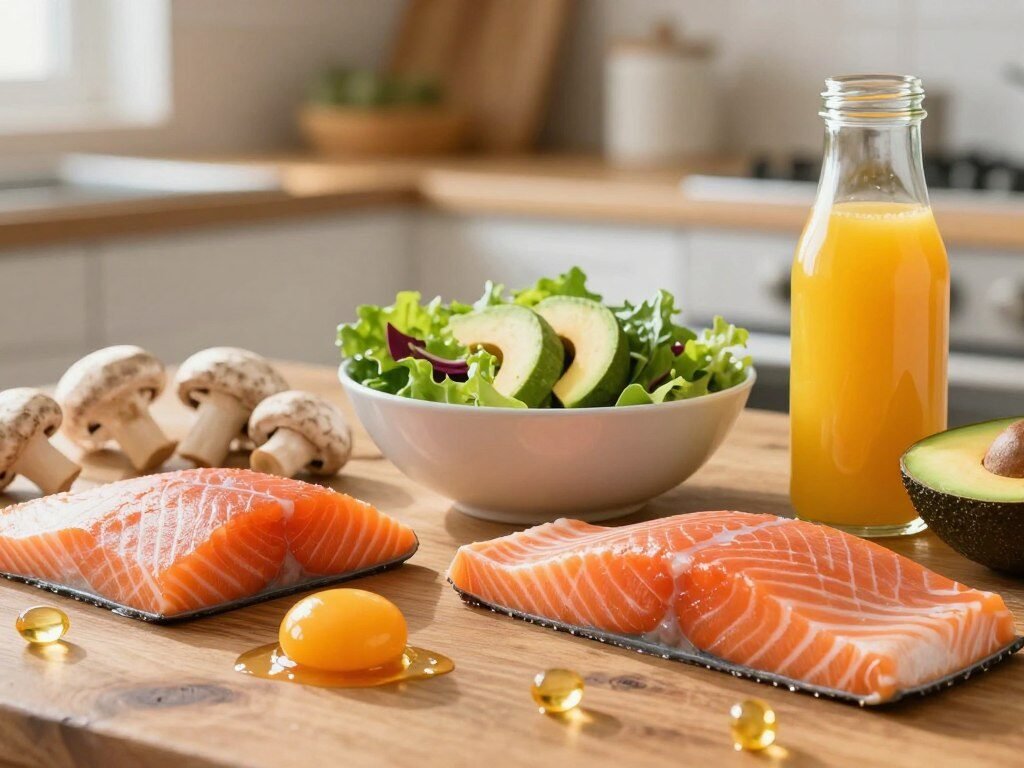
Fatty fish: salmon, trout, and sardines
Fatty fish offer a strong natural source. Three ounces of wild sockeye salmon provide about 447 IU. Per 100 grams, grilled herring has 16.1 micrograms, steamed salmon 9.3, grilled mackerel 8.5, and canned sardines 3.3. Trout adds another practical choice.
UV-exposed mushrooms
Mushrooms exposed to ultraviolet light can supply up to 450 IU in a half-cup. Regular varieties may contain much less, so check the package.
Egg yolks, liver, and lean red meat
One large egg yolk provides about 41 IU; another estimate lists 68 IU per egg. Three ounces of cooked beef liver offer about 42 IU. Lamb liver has just under 1 microgram per 100 grams. Lean red meat contains smaller amounts.
Fortified milk, cereals, and other choices
Fortified cow’s milk, plant milks, breakfast cereals, and orange juice can contribute. One cup of fortified orange juice may contain about 137 IU. Check labels, since levels differ by brand.
| Choice | Serving | Approximate amount |
|---|---|---|
| Wild sockeye salmon | 3 ounces | 447 IU |
| UV-exposed mushrooms | ½ cup | Up to 450 IU |
| Egg yolk | 1 large | About 41 IU |
| Cooked beef liver | 3 ounces | About 42 IU |
| Fortified orange juice | 1 cup | About 137 IU |
3. When to Eat Vitamin D Foods Throughout the Day
Spread useful sources across meals instead of relying on one dish. A steady meal pattern can help you get vitamin D from varied choices while keeping your routine simple.
Build a vitamin D-rich breakfast with eggs or fortified cereal
At breakfast, serve eggs or fortified breakfast cereals with milk or plant milk. One large egg yolk has about 41 IU. A mushroom omelet adds variety: a half-cup of UV-exposed mushrooms may provide up to 450 IU. Check labels, since nutrient content differs by brand and product.
Add fish or fortified foods to lunch and dinner
At lunch or dinner, add salmon, sardines, or another fish choice. A 3-ounce serving of wild-caught sockeye salmon contains about 447 IU. Fortified milk or plant milk can also fit into a meal or snack.
These simple choices spread sources through the day. Pair them with other nourishing meals, rather than counting on one food to provide enough vitamin D. Fortification levels vary, so check each label as you plan your diet.
4. How to Choose Foods with More Vitamin D
Package claims can help you spot stronger sources, but serving size matters too. Compare labels before adding a product to your cart. The listed amount reflects one serving, not always the full package.
Check labels and fortification details
Look at the nutrition panel and compare vitamin content per serving with your recommended daily target. Fortification varies by brand. One cup of fortified orange juice may provide about 137 IU, though some products contain less. That difference shows why a quick label check helps you know what you’re getting.


“Check the serving size before comparing amounts.”
- Fortified choices may include cow milk, plant-based drinks, cereal, oatmeal, and juice.
- Choose mushrooms labeled “UV-treated,” “vitamin D-enhanced,” or “high in vitamin D.” Regular varieties may not receive UV light.
- Check local labels: some countries fortify cow’s milk, while the UK does not.
Compare products within the same category, since added amounts can differ widely.
5. Ways to Support Vitamin D Absorption and Get the Best Results
Absorption often depends on what else is on your plate, not just the nutrient itself. Because it dissolves in fat, pair fortified items or other rich choices with a meal that includes avocado or olive oil. This simple step may help your body use it.
Pair nutrient-rich choices with healthy fats
Fatty fish can be a good source of this nutrient and omega-3 fats. These fats support heart health, and fish may also benefit skin health. Add salmon or sardines to a weekly meal plan; they pair well with vegetables and whole grains.
Build steady meal and sun habits
One estimate suggests 5–30 minutes of daily sun exposure as a natural source. That is not a reason to seek unprotected rays. Needs vary by season, location, and skin tone. Use shade, clothing, and sunscreen to protect your skin, and avoid burns.
Keep a steady diet with fortified items or nutrient-rich meals, especially when you spend little time outdoors. If you’re concerned you’re getting enough through daily habits, ask a clinician about testing and personal guidance. Safe routines can help you make thoughtful choices while caring for your skin.
6. Recommended Daily Vitamin D and When to Ask About Supplements
Daily intake guidance varies by age and location. These figures offer a starting point, but personal needs can differ.
Compare daily intake guidance
One U.S. source suggests 600 IU each day for people ages 1–70, and 800 IU for adults over 70. It also lists 800 IU for women over 40. Another source recommends 800 IU, or 20 micrograms, daily for adults and children over age four. UK guidance sets a lower target: 400 IU, or 10 micrograms, each day.
Review personal needs with a clinician
Ask a healthcare provider about testing, vitamin levels, suspected deficiency, and whether dietary supplements suit your needs. Osteoporosis, kidney or liver disease, Crohn’s disease, and celiac disease may raise deficiency risk. Getting enough through meals and safe sun habits varies by person.
“Ask before you add a supplement.”
Excessive supplements can harm health. Toxicity has been linked with 60,000 IU daily over months; sunlight or food alone does not cause it. Liver contains high amounts of vitamin A, so pregnant people should avoid it.
| Guidance source | Daily amount | Group or note |
|---|---|---|
| U.S. source | 600–800 IU | Age-based figures; 800 IU also listed past age 40 |
| Second source | 800 IU (20 micrograms) | Adults and children over age four |
| UK guidance | 400 IU (10 micrograms) | Daily target; avoid liver during pregnancy |
7. Conclusion
Build a practical routine with fatty fish, UV-exposed mushrooms, egg yolks, and fortified foods. A 3-ounce serving of sockeye salmon supplies about 447 IU. These choices add variety, supply vitamin D, and help the body absorb calcium to support strong bones.
Eggs or fortified cereal can start breakfast; serve fish or fortified options at lunch or dinner. Check labels each time, since levels vary by brand, serving, and mushroom package. Small label checks make nutrient choices clearer.
Choose meals that fit your needs and overall health, and protect your skin during sun exposure. If you have questions about vitamin D levels or supplements, ask a healthcare provider for guidance based on your health history. Personal advice can help you choose a safe next step.