

Most diarrhea comes from a stomach bug or food poisoning and usually stops within 5 to 7 days, but sometimes sex is the cause. Some infections passed on during sex do cause diarrhea, even though most cases have nothing to do with it.
That gap matters for your sexual health. If loose stool starts days after a new partner, the usual advice to wait it out may not fit. The guide below covers what the condition is, how it spreads, which symptoms to watch for, and how to care for yourself and the people you have sex with.

Think of this as a practical map rather than a diagnosis. Next comes what sexually transmitted diarrhea actually is and how it spreads between people.
Key Takeaways
- Most diarrhea is caused by food or a stomach bug, not sex.
- Germs can pass between partners through mouth-to-anus contact and unwashed hands.
- Shigella is the main gut infection linked to sex, and it is increasingly drug-resistant.
- Gonorrhea and chlamydia in the rectum often cause no symptoms at all.
- Diarrhea that lasts over a week, or is bloody, needs medical care.
- Tell your clinician about anal sex or rimming so they test for the right germs.
What Is Sexually Transmitted Diarrhea and How Does It Spread?
Sexually transmitted diarrhea is loose stool caused by a germ that passes between partners during sex, and the germs behind most infectious diarrhea can travel this way. Transmission is most likely during oral-anal contact, which is rimming (mouth-to-anus contact).
The germs live in stool. Even a trace too small to see can reach a partner’s mouth and cause infection. Shigella is the clearest example: only a tiny amount of the bacteria is needed to make someone sick.
Tiny traces of stool are enough to pass a gut infection, so contact between the anus and the mouth or hands is the main risk.
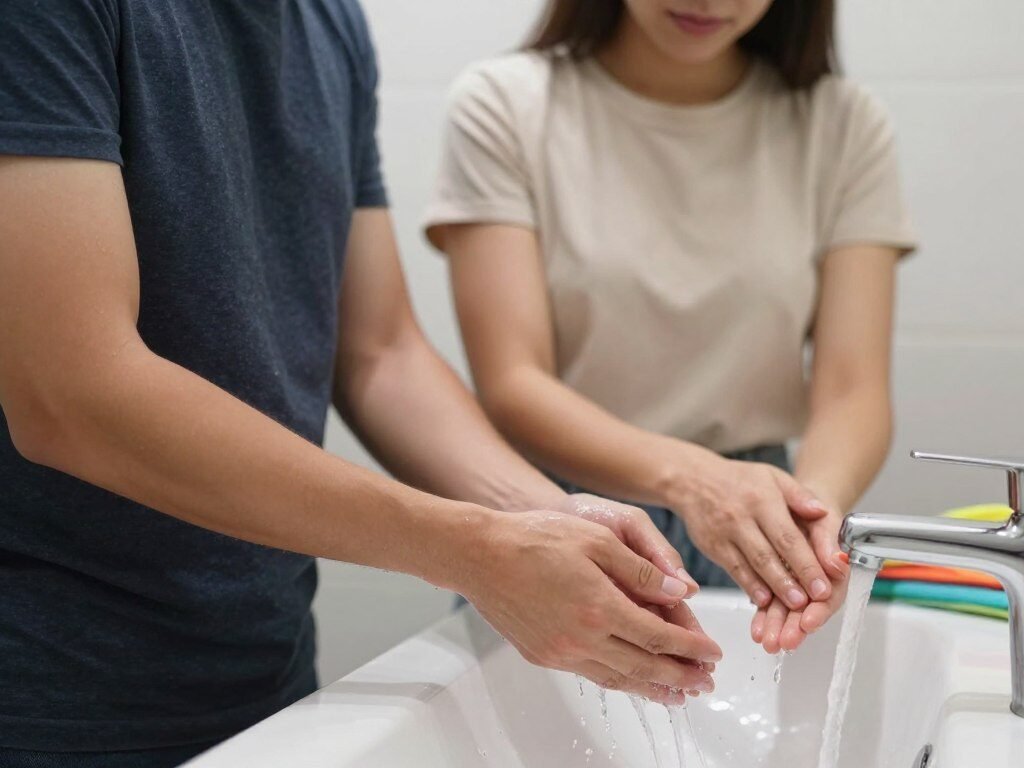
Shigella spreads through rimming, through giving oral sex after anal sex, and through unwashed hands. Sex toys shared between partners can carry the same traces from one person to another. Other forms of sex can also pass germs on hands or objects.
Many people ask whether swallowed sperm can cause diarrhea. Semen is not the usual cause. The risk comes from fecal traces on the penis or hands after anal contact, and no data points to semen itself as a cause.
Anyone can be affected. Outbreaks, though, have clustered among gay, bisexual and other men who have sex with men (GBMSM). So which infections are actually behind it?
Which Infections Cause Diarrhea After Sex?
Shigella is the main gut infection tied to sex, and it causes shigellosis, a bloody diarrhea illness. Symptoms start 1 to 4 days after infection: diarrhea that can be bloody, stomach cramps, and fever.
England recorded 2,560 cases of sexually transmitted Shigella in 2025. Resistance is a growing worry. More than half of Shigella sonnei samples tested resisted all three usual first-choice antibiotics, and in 2025, 86 percent of S. sonnei and 94 percent of S. flexneri samples showed resistance.

| Infection | Type of germ | Usual symptoms | How common is diarrhea |
|---|---|---|---|
| Shigella | Bacteria | Bloody diarrhea, cramps, fever | Very common |
| Giardia | Parasite | Watery or greasy smelly diarrhea, bloating, gas | Common |
| Campylobacter or E. coli | Bacteria | Watery or bloody diarrhea, pain, fever | Very common |
| LGV | Chlamydia type | Rectal pain, discharge, loose stool | Sometimes |
| Gonorrhea or chlamydia | Bacteria | Pain, itching, discharge, bleeding | Rare |
Gut infections: Shigella and others
Resistance is higher in sexually acquired Shigella, so treatment may differ from a travel case. Campylobacter and E. coli bring watery or bloody diarrhea, pain, and fever. Hepatitis A can cause diarrhea or constipation and yellow skin and eyes. Cryptosporidium and Entamoeba histolytica are further causes.
STIs that affect the rectum
Proctitis is inflammation of the rectum that can cause pain, discharge, bleeding, or a false urge to poop. Most rectal gonorrhea or chlamydia cases cause no symptoms, so diarrhea is rarely the sign.
LGV is a more invasive form of chlamydia. Of 1,274 diagnoses with gender recorded in England in 2024, 1,252 were in men. Herpes proctitis in GBMSM often shows no visible sores; syphilis can cause painless sores around the rectum, and mpox can cause pain, bleeding, and rash.
HIV and diarrhea
An early flu-like illness comes 2 to 6 weeks after HIV infection, and diarrhea is not a main early sign. Long-lasting unexplained diarrhea is still a reason for an HIV test. Some HIV medicines also cause diarrhea.
Knowing the germs helps, but the pattern of symptoms tells you more about whether a stomach bug or a sex-linked infection is likely.
Symptoms and Signs to Watch For
Picture diarrhea that begins a few days after a new partner, with cramps that do not ease. That pattern, especially after rimming, is a reason to suspect a sex-linked infection, though symptoms alone cannot confirm the cause.
Look for these signs:
- Watery diarrhea with cramps
- Bloody diarrhea with fever
- Mucus from the rectum
- Pain or a constant urge to poop
- Rectal itching or discharge
- Yellowing skin or eyes
Doctors group rectal and gut infections into three patterns. Enteritis shows watery diarrhea and central abdominal cramping. Proctocolitis shows bloody diarrhea, anal mucus, and lower abdominal pain. Distal proctitis shows constipation, pain when pooping, and anal mucus.
A typical stomach bug clears in 5 to 7 days. Diarrhea that lasts longer after a recent new partner or rimming deserves a sexual health visit. Shigellosis can stay infectious for up to a month.
Plenty of non-sexual causes exist too: norovirus, food poisoning, antibiotics, anxiety, food intolerance, IBS, IBD and celiac disease. Because skin, stomach and bowel signs overlap, testing is the only way to know. Here is what to do when these signs appear.
How to Care for Yourself and Protect Partners
The first steps are fluids, rest, and a stool test. Drink plenty of fluids while your body clears the infection, and ask a clinician to test a stool sample to check for gut infections such as Shigella.
Most Shigella cases resolve without treatment, but severe cases need antibiotics, and options are limited. Treatment depends on local resistance results, so the doctor decides. Detox products do not flush out Shigella; fluids and rest do the work.
Get tested and treated
Tell recent partners so they can get checked. A urine test does not find rectal infection; a rectal swab is needed. UK guidance recommends three-site testing (urine, throat, rectum) for sexually active GBMSM. A common mistake is ending a rectal STI check with a urine sample only.
Home care and hygiene
- Wash your hands well, especially after the toilet.
- Avoid preparing food for others.
- Do not share towels.
- Skip pools and hot tubs.
- Stay off work until 2 days after your last sickness or diarrhea.
- Avoid sex until 7 days after the last symptom (UK advice).
Lower the risk during sex
Use barriers during oral and anal sex, and dental dams for rimming. Wash before and after sex, and clean shared sex toys or cover them with a new condom. A California health department suggests avoiding sex with someone who had diarrhea in the last two weeks.
Some signs mean home care is not enough, and those call for urgent help.
When to Seek Medical Help
Bloody diarrhea or fluids that will not stay down need care the same day. Blood in your poop or bleeding from the rectum cannot wait for a routine clinic slot, while a mild case can.
Get urgent care for any of these:
- Diarrhea lasting more than 7 days
- Vomiting for more than 2 days, or being unable to keep fluids down
- Dehydration despite rehydration sachets, such as dark smelly pee or peeing less
- Vomiting blood, or coffee-ground or green vomit
- Sudden severe stomach pain or headache
- Stiff neck with pain in bright light
- Blue, grey, pale or blotchy skin, lips or tongue
- Severe breathing difficulty or confusion
Bloody diarrhea or fluids that will not stay down need same-day care, not a wait-and-see approach.
The risk is real. Up to a third of sexually transmitted Shigella patients in earlier UK research were hospitalized for an average of 4 to 5 days. In US data, more than a third of extensively drug-resistant shigellosis patients were hospitalized.
Tell the clinician about oral-anal contact or anal sex, since many clinicians do not ask. That detail steers them to test for the right germs and choose treatment well. With the warning signs and the visit covered, one final point ties it together.
Conclusion
Diarrhea is usually harmless, but your sex history matters when it lingers, turns bloody or follows a new partner. Most cases are not an STI. Still, gut infections like Shigella are real and increasingly drug-resistant.
Rectal infections can also stay silent, so a lack of symptoms does not clear you. Book a sexual health screening that includes a rectal swab if you have anal sex or rectal symptoms, and ask for a stool test if your diarrhea is bloody or lasts a week.