







Someone scrolls past a photo from last weekend and notices a rounder face than the one in the mirror. Learning how to lose face fat starts with that moment, and it takes small daily habits, not tricks.
The title covers three ideas: losing fat, facial appearance, and getting a slimmer-looking face. A full face can come from fat or fluid buildup, and each needs a different approach. This guide offers simple habits that readers can start this week.

Start with one habit, not all of them, since habits stick when they stay small.
Key Takeaways
- Fat cannot be removed from the face alone; overall fat loss slims it.
- Fluid shifts first, so less sodium and better sleep change the face fastest.
- A pace of 1 to 2 pounds per week is the usual goal.
- Facial exercises may tone muscle but do not burn fat.
- Slow loss protects facial fullness and skin.
- Sudden rounding or unplanned weight loss deserves a doctor visit.
1. Why Targeting Only the Face Does Not Work
You cannot choose where your body loses fat. Facial fat usually decreases as overall body fat decreases. Spot reduction means trying to lose fat from one specific area by exercising or targeting only that area.
The research is plain. A 2021 meta-analysis of 13 studies with more than 1,100 participants found that localized muscle training did not affect localized fat deposits. In a randomized 12-week trial, adding abdominal exercises to dietary changes did not cut belly fat more than diet changes alone.
Plan for the whole body, because fat leaves in an order the body picks, not the one a person wants.
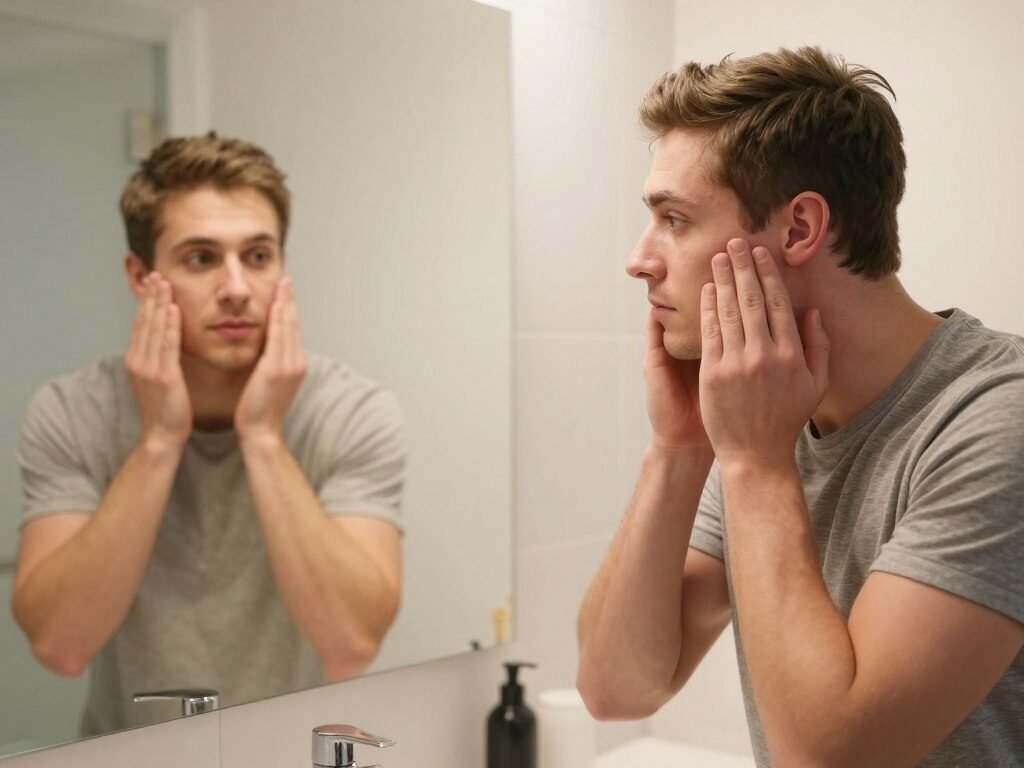
Genes can account for 60% of where fat is distributed. That explains why a skinny guy can still have a chubby face. The cause is often genes or fluid, not a failed diet.
Age changes the picture too. Aging can reduce facial subcutaneous fat, which makes the face look thinner and more angular. Weight gain, on the other hand, often shows up in the cheeks early.
So the body decides the pace. Plan for the whole body, and expect the face to follow at its own pace.
2. How to Lose Face Fat and Puffiness With Daily Habits
The quickest change in the face is usually fluid, not fat. Nobody can lose face fat in 24 hours, and the same goes for any fast plan, but facial puffiness can shrink within a day or a few days.
Sleep, sodium, alcohol, allergies, and some medications can all add to puffiness. Morning puffiness usually lasts a couple of hours and often looks noticeably reduced by mid-morning, which is normal.

Cut Sodium and Alcohol to Reduce Puffiness
Excess sodium can cause fluid retention that adds to facial swelling. Over 70% of dietary sodium comes from processed foods, and the American Heart Association recommends under 2,300 mg per day.
Alcohol acts as a diuretic and holds mostly empty calories. Four easy swaps put this into practice:
- Swap chips and deli meat for whole foods.
- Pick water instead of sugary drinks.
- Take one alcohol-free night each week.
- Keep a fixed bedtime.
Sleep, Water and Fiber for Steady Progress
Enough sleep keeps fluid and hunger in balance, and water helps the body shed extra salt. Fiber from beans, fruit and oats keeps meals filling, so the daily intake of snacks falls on its own.
Pick one swap, repeat it for two weeks, then add the next.
3. Eating and Moving for Overall Fat Loss
A pound or two a week is the pace health agencies suggest. The CDC suggests aiming to lose 1 to 2 pounds per week, an average of 4 to 8 pounds per month, and that steady pace is what slims the face over time.
The NIDDK Body Weight Planner, made for adults 18 and older, helps set a calorie plan. A common mistake is trusting the 3,500-calorie-per-pound rule. It does not predict weight loss well because the body adapts to a calorie deficit. Crash diets make it worse.
Balanced Meals, Whole Grains and Fiber
Choose whole grains instead of refined carbs like cookies and crackers. Adults need 28 to 34 grams of fiber daily. Good fiber foods include:
- Fruits and vegetables
- Legumes such as lentils and black beans
- Nuts and seeds
- Oats and brown rice
A 2019 review found that replacing caloric drinks with water was the most effective of three water habits, with a 5.15% average weight loss after 12 weeks.
Cardio and Strength Training
Adults should get at least 150 minutes of moderate aerobic exercise weekly, plus two days of resistance training. Strength work protects muscle mass while fat comes off. Adults also need at least 7 hours of sleep per night.
Weigh in once a week, not daily, because water shifts hide real progress.
4. Do Facial Exercises Help?
Facial exercises tone muscle, but the evidence that they remove fat is missing. They may help the face appear slimmer by firming the muscle under the skin, and nothing more is proven.
In a 20-week pilot study, 16 middle-aged women did 32 facial exercises, 30 minutes daily for 8 weeks, then 3-4 times a week for weeks 9 to 20. Blinded raters saw improved upper- and lower-cheek fullness. Estimated age fell from a mean of 50.8 to 48.1 years.
The study had no control group, only middle-aged women and 11 dropouts. The researchers said more research is needed, so the results are early at best.
A few moves are easy to try:
- Puff the cheeks and move the air side to side.
- Alternate a lip pucker with a relaxed mouth.
- Hold a wide smile for several seconds.
Treat them as an optional extra of a few minutes, not a replacement for overall fat loss.
5. What to Expect and When
One week can change puffiness but not fat. In one week, only puffiness changes, which is why a plan to lose face fat in a week gives only a small, fluid-based change.
Fat takes weeks to months. Slow, steady loss helps skin adapt and keeps some facial fullness. For more on safe short-term goals, see this guide on how to lose weight in a week safely.
| Change | What changes | Usual pace |
|---|---|---|
| Puffiness | Fluid in the face | Days, with sodium and sleep changes |
| Fat change | Cheek and chin fullness | Weeks to months |
| Skin looseness | Skin tightness | Slow loss helps skin adapt |
Massive weight loss can cause mid-cheek fat-volume loss, deeper nasolabial folds, flatter cheeks and skin laxity beneath the chin. A review of 14 studies reported a link between massive weight loss and facial aging. Only one study had objective facial data after Ozempic use.
Weight loss that happens without trying needs a doctor, since some conditions can also make the face look gaunt. Slow loss is kinder to the face than fast loss.
6. When Face and Chin Fat Need Professional Help
Some fullness is medical or stubborn, and no habit will fix it. A doctor should check a face that changed without a clear reason, since health causes exist.
Cushing’s syndrome affects 40 to 70 cases per million, and long-term high-dose glucocorticoids are its most common cause. A rounded face with weight gain around the middle, thinning limbs, a fatty pad between the shoulders, easy bruising, purple stretch marks, and muscle weakness needs a doctor.
A face that changes without a clear reason is worth a doctor visit, not another diet.
See a doctor for any of these:
- Sudden rounding of the face
- Cushing’s signs, as listed above
- Steroid use
- Fullness that stays despite lower body fat
For chin fat alone, Kybella contains deoxycholic acid and is FDA-approved for fat beneath the chin. It treats fullness from fat, not loose skin or muscle laxity. A session takes about 20 to 30 minutes, and most people need 2 to 4 sessions about one month apart, up to 6. Swelling, tenderness, or bruising for a few days is common.
Jawline definition comes from lower overall fat and good posture. A double chin from loose skin will not respond to injections, and this page on managing loose skin after weight loss offers more to read.
7. Conclusion
A slimmer-looking face comes from healthy habits, not quick tricks. It takes a healthy lifestyle and patience because facial changes can take time and happen at different rates for each person.
Tonight, set a bedtime and swap one salty snack for fruit or unsalted nuts. Begin tonight with one small change.