






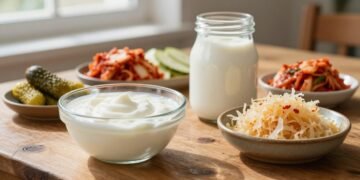
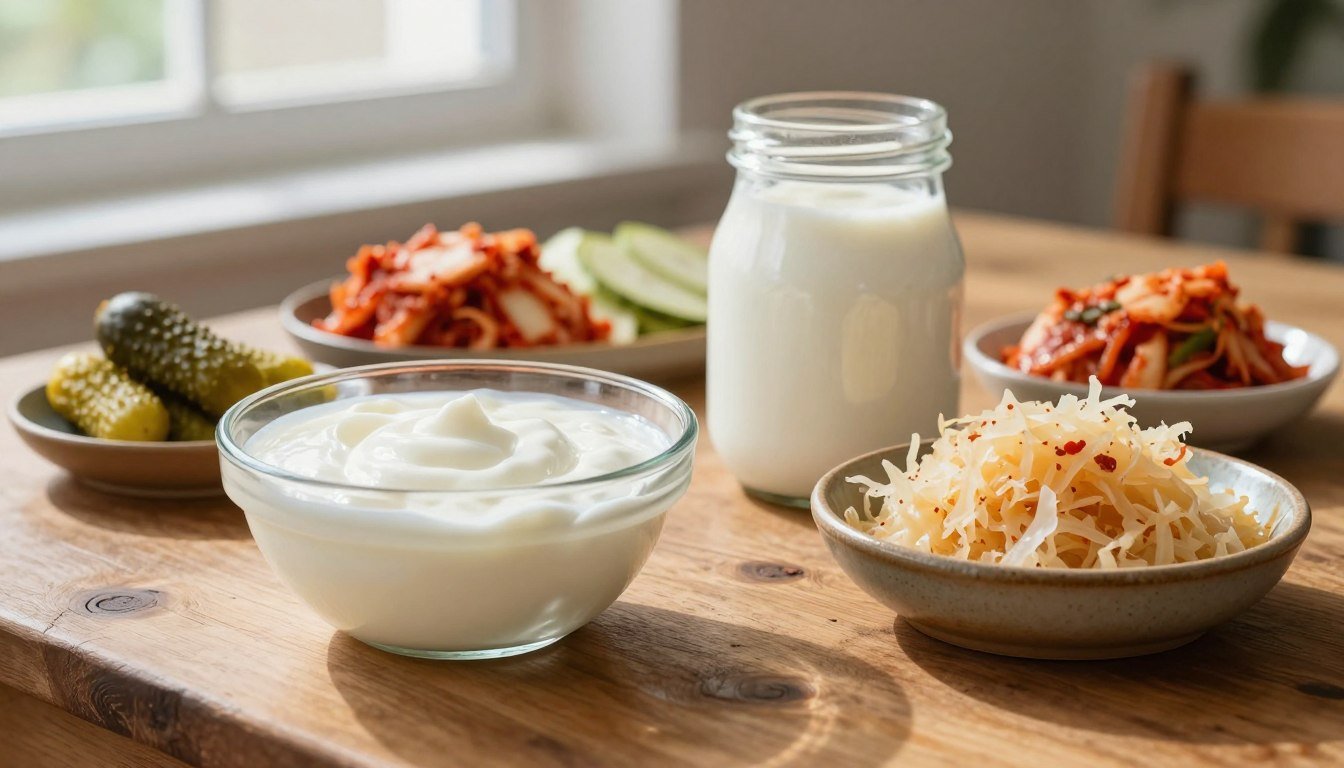
Probiotic foods include yogurt, kefir, sauerkraut, and other foods with live cultures, but only microorganisms shown to benefit health qualify as probiotics. Fermented foods have a long history, and thousands of varieties are eaten worldwide. A food’s fermentation history alone does not show that its microbes improve health.
Food choices can support gut health and digestion, but they cannot promise a better outcome for everyone. This article covers 15 options: yogurt, kefir, cultured buttermilk, aged cheese, cottage cheese, sauerkraut, kimchi, salt-fermented vegetables, miso, tempeh, natto, kombucha, apple cider vinegar with the mother, kvass, and tepache. Some contain live cultures, while others may not contain live microbes when eaten.

The best starting point is a food the reader enjoys and can tolerate.
Key Takeaways
- A fermented food is not automatically a probiotic.
- Yogurt and kefir are practical dairy choices with cultures.
- Vegetable and soy ferments can suit plant-based meals.
- Fruit can feed gut microbes, but is not itself a probiotic.
- Personal tolerance and a product’s live cultures both matter.
01
of 16
How the Digestive System Works
Digestion begins in the mouth and ends when waste leaves through the anus. The digestive system includes the GI tract, liver, pancreas and gallbladder, though only the tract carries food. Peristalsis is coordinated muscle contractions that move food and liquid through the GI tract.
The small intestine absorbs most nutrients, while the large intestine absorbs water. The liver, pancreas and gallbladder support digestion, but they are not sections of the GI tract.
| Structure | Place in the route | Main role |
|---|---|---|
| Mouth | Beginning | Chews food and mixes it with saliva |
| Esophagus | Between mouth and stomach | Moves swallowed food to the stomach |
| Stomach | After the esophagus | Mixes food with digestive juices |
| Small intestine | After the stomach | Digests food and absorbs most nutrients |
| Large intestine | After the small intestine | Absorbs water and forms stool |
| Anus | End | Releases stool from the body |
Food moves through the GI tract as muscles contract behind it and relax ahead of it.
Digestive juices break proteins into amino acids, fats into fatty acids and glycerol, and carbohydrates into simple sugars. The body can then absorb these smaller parts.
Most nutrient absorption happens in the small intestine, while the large intestine reclaims water.
02
of 16
What Gut Bacteria Contribute to Health
Gut bacteria help process what the small intestine leaves behind, and some make vitamin K. These microorganisms live among other microbes in the gut microbiome, the community of tiny living things in the gut.
Gut microorganisms assist digestion, but they are only one part of the system. Bacteria in the large intestine help break down remaining nutrients. Their roles differ, and microbial communities vary from person to person.

Digestive function also involves nerves, hormones, blood and digestive organs. These parts send signals, move nutrients and help the body respond to food. A change in one microbe does not explain every change in digestion.
Gut health can involve many factors, including diet, sleep, stress and a person’s health conditions. Food may support normal digestion, but no single ingredient can promise to prevent disease or fix every symptom.
A varied, balanced diet supports the broader digestive system rather than targeting one microbe.
03
of 16
Probiotics, Prebiotics and Synbiotics
Probiotics supply live microorganisms, while prebiotics are food components that selectively feed desirable microorganisms. A probiotic can benefit its host when given in adequate amounts. Evidence depends on the specific strain, not just its species.
One strain’s proven benefit cannot be assumed for another strain or species. The International Scientific Association for Probiotics and Prebiotics criteria call for strain-level identification and evidence of a health benefit in at least one randomized controlled trial.
| Term | What it is | Example or role |
|---|---|---|
| Probiotics | Live microorganisms that benefit the host in adequate amounts | Lactobacillus, Bifidobacterium or Saccharomyces boulardii |
| Prebiotics | Nondigestible components that selectively feed microorganisms | Onions, garlic, berries and Jerusalem artichoke |
| Synbiotics | A combination of probiotics and prebiotics | Pairs live microorganisms with food for selected microbes |
Prebiotic sources include Jerusalem artichoke, chicory roots, berries, tomatoes, unrefined wheat, onions, asparagus, garlic and soybeans. Gut microbes ferment some prebiotic fibers. That process can produce short-chain fatty acids, including acetic and propionic acids.
A [prebiotic food guide](https://holisticpose.com/prebiotics-for-gut-health-benefits-foods-and-tips/) explains how these fibers feed existing gut bacteria. The foods that supply them can fit into everyday meals.
A synbiotic combines both, but the specific strains and ingredients still matter.
04
of 16
Are All Fermented Foods Probiotic?
Fermentation describes how a food is made, not proof that it delivers a health benefit when eaten. Fermented foods result from desired microbial growth and enzymatic conversion, but they do not always retain live microbes.
“Live and active cultures” is often more accurate than “probiotic” when a health benefit has not been shown. Bread, chocolate and beer can be fermented, yet baking, roasting or filtering may remove live microbes before consumption.
Kimchi and kombucha are typically eaten with live microbes, but those microbes generally do not meet probiotic criteria. The word “fermented” alone does not identify the strains or prove a health effect.
In lactic acid fermentation, microbes make lactic acid and lower a food’s pH. That change inhibits some spoilage and disease-causing species. Fermentation can also extend shelf life through organic acids, alcohols, bacteriocins and other compounds.
A 2024 review described fermented foods as part of human food culture for at least 8,000 years. An estimated 5,000 varieties, mostly made by artisans, may be eaten worldwide.
Check what remains in the food at the time it is eaten, not just whether fermentation occurred.
05
of 16
Probiotic Foods: Dairy Choices With Live Cultures
Plain yogurt with live cultures is the easiest dairy starting point for many people. Yogurt, kefir and certain cheeses can contain microbes, but not every product has the same cultures.
Check the label for live or active cultures rather than assuming every yogurt contains probiotics. Yogurt cultures can supply lactase to the intestine and may improve lactose tolerance in people who are lactose intolerant.
Common probiotic microorganisms include Lactobacillus and Bifidobacterium. Their presence does not mean every product has a proven health benefit. For children, familiar foods such as yogurt may be a reasonable introduction, starting with small portions and increasing gradually if tolerated.
Yogurt
Yogurt is milk fermented with cultures, and it can be plain or flavored. A bowl with berries works for breakfast, while plain yogurt can replace some sour cream in a dip. Dairy-free yogurt may also contain live cultures, though its ingredients and cultures vary.
For “probiotic foods in yogurt,” the useful check is whether the package names live or active cultures. That label does not guarantee a particular strain’s benefit. Some yogurt cultures can help people digest lactose, but people respond differently.
Kefir
Kefir is a drinkable fermented milk that often has a tangy taste. It can go into a smoothie or be poured over cereal. Its texture and flavor differ from standard yogurt, so a small glass can help someone see whether it suits them.
Some products contain added sugar or flavoring. Kefir made from dairy may not suit someone with a milk allergy. A lactose-intolerant person may still tolerate some cultured dairy, but tolerance is personal.
Cultured Buttermilk
Cultured buttermilk is fermented milk with a tangy taste. It can be poured into a glass or stirred into a savory dressing. It differs from the buttermilk commonly used in baking, which is often a recipe ingredient rather than a drink chosen for live cultures.
Products vary, so the package matters. Some cultured buttermilk is heat-treated after fermentation, which can reduce or remove live microbes. It may also be salty, a point to consider when comparing dairy options.
Aged Cheese
Some aged cheeses, including cheddar, mozzarella and Gouda, may contain live microbes. A few slices can go into a sandwich or snack plate. Cheese varieties can add flavor and protein, but their salt and saturated fat content can differ.
Aged cheese may have fewer live microbes than a fresh cultured product, and processing affects what remains. A cheese’s name alone does not establish a probiotic benefit. A 20-choice roundup can count cheese varieties separately without suggesting each has a distinct proven effect.
Cottage Cheese
Cottage cheese is a fresh, soft cheese that can be eaten with fruit or added to a lunch bowl. Some brands add live cultures, so the ingredient list or package statement can help identify them.
Its mild flavor makes it an easy option for people who do not enjoy tangy ferments. Sodium levels can vary by brand. Choose an unsweetened option when possible, especially if added sugar is a concern.
06
of 16
Plant-Based Fermented Foods: Vegetables and Soy
Sauerkraut, kimchi, miso, tempeh and natto provide several plant-based ways to explore fermented foods. Vegetables and soy can bring live microbes to meals, though the microbes are not automatically proven probiotics.
Vegetarians and vegans can choose vegetable and soy ferments without dairy. Miso and tempeh can fit plant-based meals, but recipes and ingredients still matter. Some products include fish, while others may use added salt or seasonings.
Lactic acid fermentation is used in kimchi and many salt-fermented vegetables. Common probiotic microorganisms include Lactobacillus and Bifidobacterium, but their presence in a food does not establish a proven benefit.
Sauerkraut
Sauerkraut is cabbage fermented with salt. A spoonful can top a bean bowl, sandwich or baked potato. It is often tangy and crisp, though texture depends on how it was made.
Refrigerated sauerkraut may retain live microbes, while heat-treated or canned versions may not. The brine can make it high in sodium, so a modest serving may suit people watching salt intake.
Kimchi
Kimchi commonly uses cabbage or radish with seasonings and lactic acid fermentation. It can add a sharp, spicy note to rice, eggs or noodles. The taste can range from mild to very hot.
Kimchi often contains salt, chili and garlic, and some recipes include fish sauce or shrimp paste. Plant-based versions are available, but checking ingredients matters for vegan meals and food allergies.
Salt-Fermented Vegetables
Carrots, cucumbers and other vegetables can ferment in a salt brine. They make a crisp side dish or a bright topping for a grain bowl. The vegetables develop a sour flavor as microbes use sugars in the food.
Salt-fermented vegetables differ from vinegar-pickled vegetables. Vinegar gives a sharp taste without the same fermentation process, while heat treatment can also affect live microbes in a jar.
Miso
Miso is a fermented soybean paste, often used in soups, marinades and dressings. A small spoonful can add a savory taste to broth or a sauce. Miso can be made with other ingredients, including rice or barley.
Miso is salty, so a little can go a long way in a meal. Cooking may affect its live microbes, and many people use it mainly for flavor rather than a specific probiotic effect.
Tempeh
Tempeh is a fermented soy food formed into a firm cake. It can be sliced, browned and added to a stir-fry or sandwich. Its texture makes it a filling choice in plant-based meals.
Tempeh is usually cooked before serving, which may reduce live microbes. It still supplies soy protein, but a cooked serving should not be treated as a guaranteed source of probiotics.
Natto
Natto is fermented soybeans with a sticky texture and strong flavor. It is often served over rice, sometimes with mustard or scallions. A small serving can be an easier first taste than a full bowl.
Natto is not familiar to everyone, and its aroma and texture can be intense. Check the package for added seasonings and sodium. Check ingredients and choose a form that fits the reader’s salt preferences and meal routine.
07
of 16
Fermented Drinks and Other Less Familiar Choices
Kombucha is the most familiar of these choices, but its live microbes do not automatically make it a proven probiotic. Fermented drinks can vary in ingredients, sugar and alcohol, so their role in digestion is not the same for everyone.
Human evidence for a specific digestive benefit from these less familiar drinks is limited. Kombucha may also cause digestive discomfort for some people. A small amount can help someone judge taste and tolerance.
Kombucha
Kombucha is fermented tea made with a SCOBY, a symbiotic culture of bacteria and yeast. It can be served cold as a tea-like drink. Some bottled products add sugar or fruit juice after fermentation.
Its tart, fizzy taste does not suit everyone, and carbonation may bother some stomachs. Kombucha can also contain small amounts of alcohol from fermentation. The amount can differ across products and batches.
Apple Cider Vinegar With the Mother
Apple cider vinegar with the mother contains fermentation microbes and strands formed during production. A small amount can be mixed into salad dressing or a sauce. It is acidic and usually works better as a food ingredient than a straight drink.
It is not a proven treatment for digestive problems. Drinking it undiluted can irritate the mouth or throat, and it can damage tooth enamel. The mother does not make vinegar a proven probiotic.
Kvass
Kvass is a fermented drink often made from grain or bread. It can be served chilled with a meal. Some versions have a mild, sour taste, while recipes and fermentation time can change the flavor.
Kvass may contain low levels of alcohol. People avoiding alcohol should check the product details or choose another drink. Its live microbes and digestive effects are not well established.
Tepache
Tepache is a fermented pineapple-rind drink traditionally made with sugar, cinnamon and water. It can be poured over ice as a tart, sweet drink. Home recipes may vary in sweetness and fermentation time.
Because tepache is made with sugar, its final sweetness can vary. Fermentation can also create alcohol. Check added sugar and alcohol content before choosing a fermented drink.
08
of 16
Can Probiotics Help During Antibiotics?
Probiotics may reduce some antibiotic-associated diarrhea risks, but the evidence differs by age group and outcome. Results depend on the group studied and do not prove that every probiotic product works.
Evidence supports possible benefit in some settings, not a blanket recommendation for every patient. A healthcare professional can help decide whether a particular product suits the person and antibiotic.
- A 2017 review of 17 studies with 3,631 nonhospitalized people found probiotics taken with antibiotics were linked to about half the likelihood of antibiotic-associated diarrhea. The evidence was moderate quality.
- A 2016 review of 30 studies with 7,260 participants did not show prevention of antibiotic-associated diarrhea in older adults. Few studies included that age group.
- A review of 23 studies with 3,938 children found moderate-quality evidence of a protective effect against antibiotic-associated diarrhea.
- A 2017 analysis of 31 studies with 8,672 patients found, with moderate certainty, that probiotics can lower Clostridioides difficile diarrhea risk in adults and children receiving antibiotics.
These findings concern different groups and outcomes. They do not establish that all strains have the same effect or that a fermented food can replace a studied product.
Do not delay or replace a prescribed antibiotic with a probiotic.
09
of 16
What to Know About Probiotic Supplements
A probiotic supplement is not automatically FDA-approved just because it is sold in the United States. Product category and intended use shape the rules that apply.
Doctors do not recommend one probiotic for everyone because effects differ by strain and health condition. A clinician’s recommendation should match the strain and intended use to the person’s situation.
| Product category | Intended use | U.S. requirement before sale |
|---|---|---|
| Dietary supplements | Supplement the diet | No FDA approval required before marketing |
| Food ingredients | Used in foods or food products | Rules depend on the ingredient and its use |
| Drugs | Treat disease or disorders | Must show safety and effectiveness in trials and receive FDA approval |
Dietary supplement labels cannot make health claims about reducing disease risk without FDA consent. A product sold as a drug to treat disease must meet a higher standard before sale.
A product label can list species, strain and amount, but those details do not mean every claim applies to every person. The same strain may have evidence for one use, not another.
Match a product’s stated strain and intended use to the question being addressed.
10
of 16
Common Digestive Problems and Symptoms
Gas, diarrhea and constipation are symptoms, while conditions such as celiac disease and Crohn’s disease need individualized care. A symptom alone does not name its cause, and a probiotic may not address the problem.
Persistent or disruptive symptoms deserve clinical evaluation instead of a guess about probiotics. Digestive conditions can affect how the body handles food and may need different forms of care.
- Diseases and long-term conditions: irritable bowel syndrome, Crohn’s disease, celiac disease and ulcerative colitis.
- Changes in bowel habits: constipation and diarrhea.
- Common symptoms: gas and acid reflux.
- Food-related problems: lactose intolerance.
These examples include both named diseases and symptoms, not interchangeable labels. The National Institute of Diabetes and Digestive and Kidney Diseases lists these among digestive diseases and conditions.
A clinician can review how long symptoms last, how often they occur and whether they affect daily life. That context can guide testing and care.
Persistent, severe or worsening digestive symptoms deserve evaluation rather than self-diagnosis.
11
of 16
Everyday Foods That Support Digestion
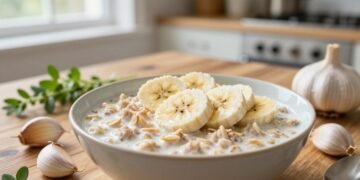
Fiber-rich fruits, vegetables, whole grains and beans support digestive regularity and feed gut microbes. Fruit can provide prebiotic fiber, but it is not itself a probiotic unless it contains live beneficial microorganisms.
Adults generally need 21-38 grams of fiber each day, depending on age and sex. Average U.S. fiber intake is 16.2 grams per day, below that typical range.
| Food group | Examples | Easy meal addition |
|---|---|---|
| Fruits | Berries, apples, pears | Add berries to oatmeal or yogurt |
| Vegetables | Tomatoes, onions, asparagus | Add vegetables to soup or eggs |
| Whole grains | Unrefined wheat, oats, brown rice | Choose whole-grain bread or cereal |
| Beans | Black beans, lentils, soybeans | Stir beans into salads or rice bowls |
Berries, tomatoes, onions, asparagus, unrefined wheat and soybeans can supply prebiotic components. Fiber also comes from many other plant foods. A prebiotic food guide gives more examples and meal ideas.
For more ideas, see Best Foods For Gut Health To Improve Your Digestion.
Increase fiber gradually and pair it with adequate fluids.
12
of 16
Daily Habits That Support Gut Health
Regular movement, sufficient sleep and a varied diet support digestive health alongside food choices. Daily routines matter, though no single habit guarantees a change in symptoms.
Adults generally need at least seven hours of sleep and 150 minutes of moderate activity each week. These are broad health benchmarks, not a promise of digestive improvement.
- Regular movement: walking, biking or other activity can fit into daily life.
- Consistent sleep: keep a steady sleep and wake schedule when possible.
- Stress management: use a calm activity, such as breathing practice or time outdoors.
- Varied plant-rich diet: include different vegetables, grains, beans and fruit.
Movement can be split across the week rather than done all at once. A regular walk after a meal may be easier to maintain than a demanding workout plan.
Stress can affect how some people experience digestive symptoms. A routine that allows rest and regular meals may be more practical than focusing on one food alone.
Aim for a routine that can be maintained most days rather than an all-or-nothing reset.
13
of 16
Adding Fermented Foods Without Overdoing It
A small first serving makes it easier to tell whether a new fermented food agrees with someone. One change at a time can help separate the food’s effect from other parts of a meal.
Gas, bloating and mild cramping can occur for some people. People with existing stomach or bowel symptoms may notice these effects more clearly.
- Try a small serving of one new food, such as kefir, sauerkraut or kimchi.
- Keep the rest of the meal familiar while testing the new food.
- Increase the serving only if the first amount is tolerated.
A small spoonful of sauerkraut or kimchi can be added beside a meal. Kefir can be tried in a small glass. These examples are starting points, not required daily amounts.
Salt, acidity and spice can affect how a food feels to eat. A person can choose a milder option if a strong flavor or brine does not suit them.
Stop increasing the portion if symptoms worsen, and ask a healthcare professional about persistent symptoms.
14
of 16
Who Should Use Extra Caution With Probiotics?
Premature infants and other medically vulnerable people need individualized advice before receiving probiotics. Risk depends on the person and product, including the strain, dose and health context.
The FDA has warned health care providers about severe or fatal infections reported in premature infants given probiotics. Rare but serious harms have also been reported in other vulnerable groups.
- Premature infants need clinician guidance before any probiotic is given.
- People with serious illness or significant immune vulnerability should discuss use with their care team.
- People with a central line should seek medical advice before using probiotics.
Gas or diarrhea does not by itself prove that someone needs probiotics. Symptoms can have many causes, and a probiotic may not address them.
People who are unsure about a product can ask the clinician who knows their medical history. That is especially important when a person is seriously ill or has complex care needs.
Ask the treating clinician before giving probiotics to an infant or someone with a serious health condition.
15
of 16
Choosing Live-Culture Foods at the Store
A label that names live or active cultures is a useful starting point, not proof of a specific health benefit. Processing can change what remains in a product after fermentation.
The “Live & Active Cultures” seal is optional on yogurt, so labels still need a closer look. Pasteurization can kill live bacteria, and canning uses heat.
- Look for “live” or “active cultures” on the label.
- Check whether the food was pasteurized or canned after fermentation.
- Tell salt-fermented vegetables apart from vinegar pickles.
- Compare added sugar and salt in flavored yogurt, kombucha and brined vegetables.
Vinegar-pickled vegetables are not the same as vegetables fermented with salt and lactic acid bacteria. A sour taste alone does not show which process made the food.
Choose refrigerated, clearly labeled products when live cultures are the priority.
Refrigeration does not prove a food has a particular health benefit, but it can help preserve live cultures in suitable products. Ingredient lists also show added sugar, salt and other ingredients.
16
of 16
Conclusion
A varied diet that includes tolerated, clearly labeled live-culture foods is a practical place to begin. Personal needs still matter, since probiotic effects can depend on the strain and a person’s health.
Choose one suitable food, check for live cultures and seek care for persistent symptoms or higher-risk situations. Food choices can support gut health as part of a fiber-rich diet, but they do not replace individualized care.
Health information cannot take the place of advice from a qualified healthcare professional. Read the site’s health information disclaimer for more about its limits.
Choose one food to try this week, and seek personalized advice when symptoms or medical risks make self-guided changes uncertain.